23rd November 1883, from an article in the Cambrian Newspaper
The character of the gardening may be gathered from an expression of Mrs. Vivian, who said:
“I do not care for bedding out, but much prefer mixed borders.”
Large Myrtle flourish here, and a fine plant of Pittosporum Tobira, with its fragrant white blossoms, which are said to be used by the Chinese for bridal ceremonies in preference to Orange blossoms, covers one side of the house. The beds are filled with various kinds of flowers, and amongst them sweet smelling ones of many kinds, for Mrs. Vivian is clearly of Lady Corisande’s opinion, and does not care for a brilliant garden without perfume.
The walled-in gardens are very large, and I have never seen gardens where utility is so much studied; they serve to show how much can be done, even where appearances are somewhat against them, for, although there is a large amount of glass, a good deal of it is very old, but it is difficult anywhere to find glass more thoroughly utilised.
The Pine pits contained a most healthily and beautiful collection of plants, both fruiting and succession, and this is not to be wondered at when one recollects that Mr. Harris has exhibited some of the most perfect Queens it is possible to see from time to time in London, only in July last obtaining the silver medal of the Royal Horticultural Society for nine Queens, which were the perfection of growth. It is a pleasure to see Pines well done, for there is no doubt that their culture is decreasing very much, it is said sometimes, because who grow them can obtain such fines ones from St. Michaels; but I fancy there is another way in which these St. Michaels Pines have affected it.
Formerly the growers of Pines used to recoup themselves of some of the expense by selling their surplus in Covent Garden, and in days when they were fifteen shillings a pound, and when Pines lent out on hire, used to be a label in a fruiterer’s shop in Piccadilly, no doubt this paid well; but now when but a moderate price only can be obtained, and fine St. Michaels in the height of the London season can be had for ten to twelve shillings a piece, it does not pay, and hence Pine growing has been given up.
In the Peach houses and vineries the same excellent results had been obtained, and on the walls, which are very high and fine, there were some fine trees with a good crop of fruit. Mr. Hams had been reducing the depth of the borders, so as to give the roots the more benefit of the sun, of which there is not too much in Glamorganshire. By-the-by, he mentioned a fact which I have never heard before, viz. that the squirrels come down over the walls and take the Peaches (he had seen them do it), and says that they do not as one might have supposed, do it for the sake of the kernel, but that they regularly devour the fruit.
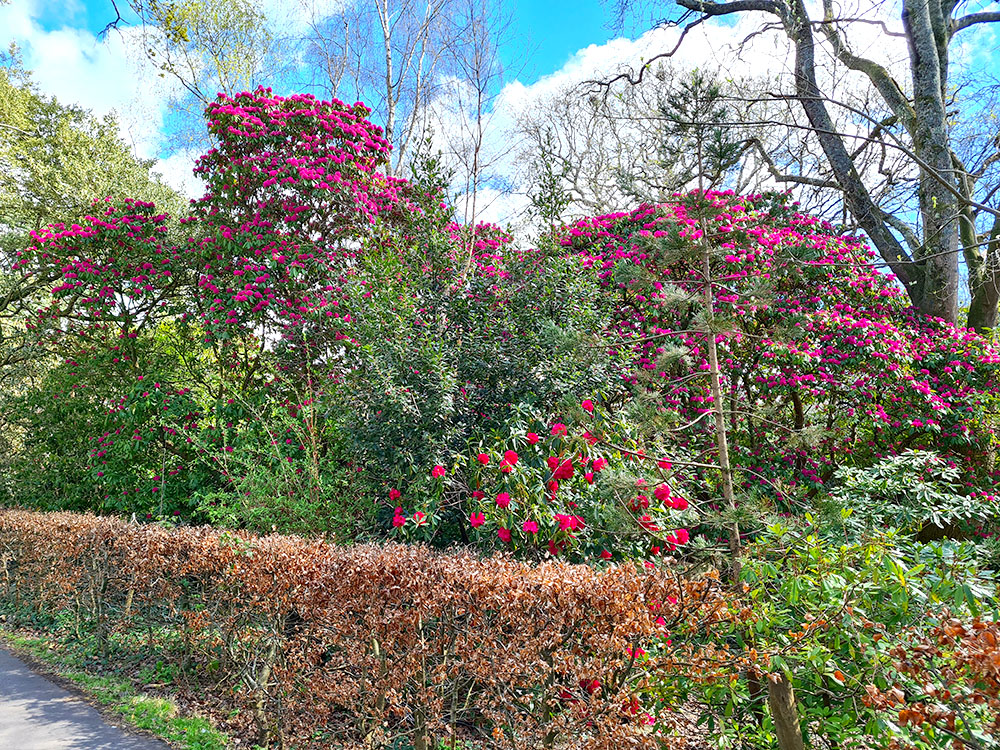
The house in which the Ferns were grown presented a picture of plants in the most perfect state of health, but I must not linger over the many good and pretty things I saw here, for I would wish to write especially of those which constitute its chief glory-the Himalayan Rhododendrons and the Conifers. One may find stove and greenhouse plant, Ferns, and fruit anywhere, but it is not everywhere that one can see such plants and trees as are to be seen here, and when they are in flower the sight must be indeed a glorious one.
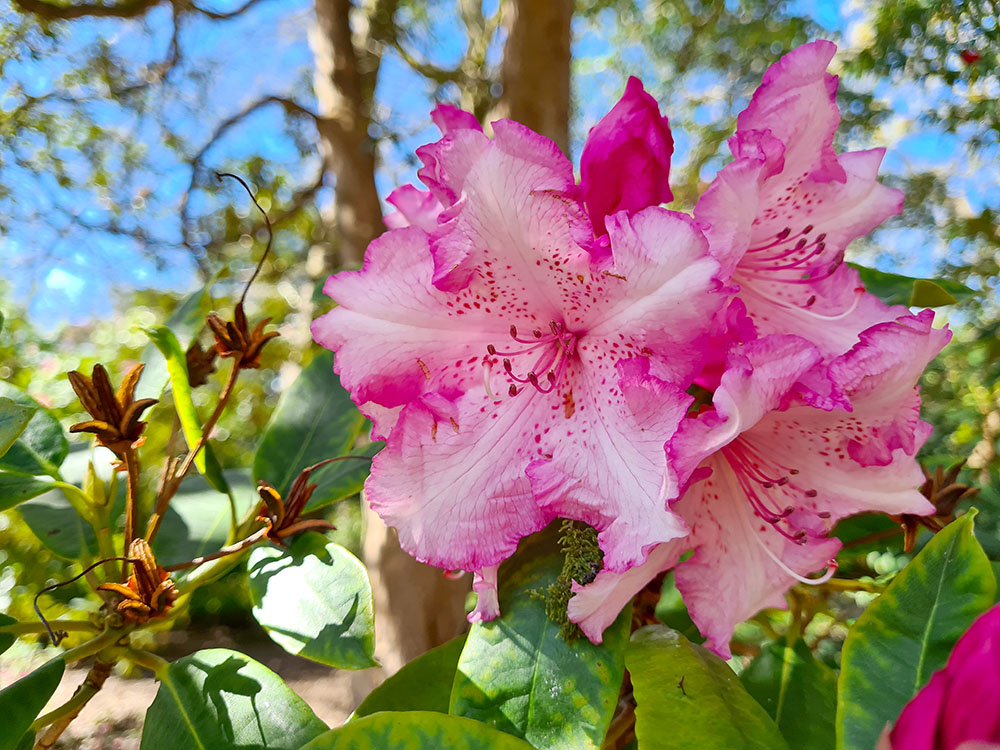
When the British Association met here some forty years ago, amongst those who were the guests at Singleton were Sir William Jackson Hooker and other gentlemen interested in India. They afterwards sent some seeds of the best of the Rhododendrons to Mrs. Vivian, and from these the plants that now adorn the grounds at Singleton were raised, and a continued process of seeding and increasing them is going on.
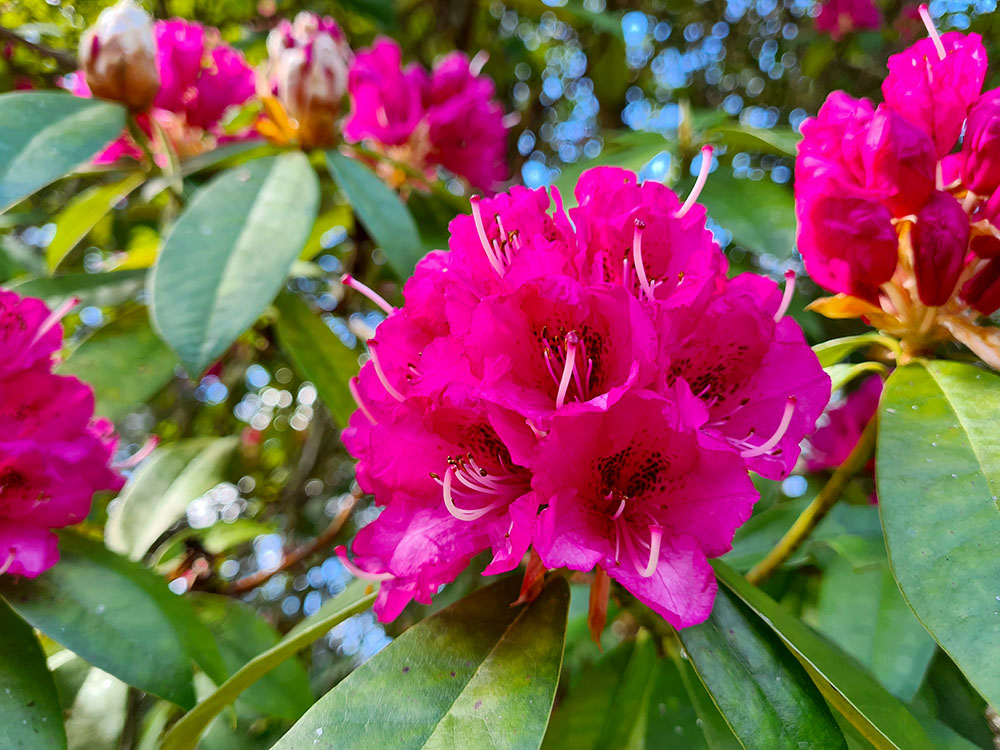
Thus in one place in the grounds there was a large bed of seedling plants of barbatum, eximium campanulatum, and many others, and it was interesting to notice that even in those characteristics which serve to mark the species as in barbatum, there was still a divergence.
I do not profess to know about them, but my friend Mr. Llewellyn, who kindly took me to see them, seemed much interested, and talked learnedly about their destinations. There I could not follow him, but I could admire the stately beauty of the plants. Nor did these trees appear to have suffered in any way from the south-westerly gales; they had been so skillfully planted with sheltering trees that they have withstood their influence, and now are quite able to take care of themselves. There are many things in Singleton that are deserving of notice, but these two constitute its glory—the Rhododendrons and Conifers and there are few places in England that I know of that can be compared with it. Dropmore is grand, its Conifers unmatched, but the Rhododendrons are not there. Lord Stair’s place at Inch Oastie comes to one’s mind, on the south-west coast of Gotland, and in the number of its Conifers it rivals Singleton, but then there are not the grand specimens of either Rhododendrons or Conifers that exist here, and altogether it is a place of which an owner might be proud, and any gardener be thankful to have under his care. Mr. Harris evidently rejoices in its beauties, and endeavors to bring his skill and intelligence to bear on the special objects of his culture. – DELTA in The Garden.